contact@webdesignerabhi.com

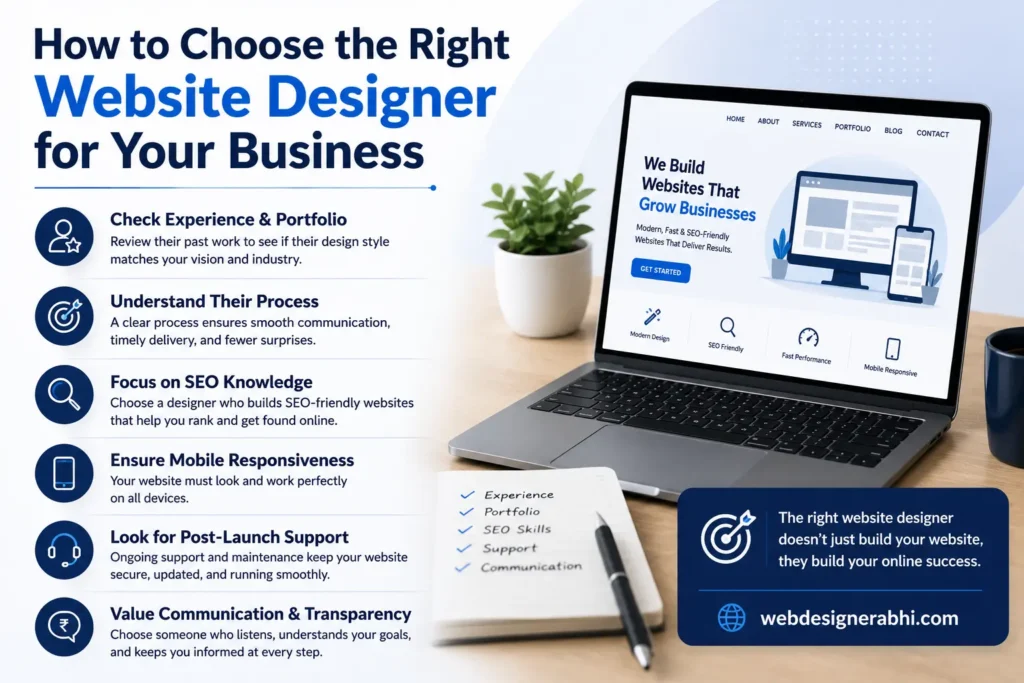
Finding a website designer feels overwhelming at first. There are freelancers, agencies, local designers, and online platforms all quoting different prices, promising different results, and using terms that mean nothing to most business owners.
The truth is, budget and communication style don’t determine quality clarity and fit do.
A designer offering affordable pricing with transparent deliverables and responsive WhatsApp communication can absolutely deliver a professional, high-performing website.
What matters is knowing what to look for, what questions to ask, and what a genuine professional looks like regardless of their price point.
I work with small business owners across India, keep my pricing accessible, and handle most client conversations directly over WhatsApp because that’s how real people communicate.
In this article, I’ll walk you through exactly how to evaluate any website designer fairly and confidently, so you make the right choice for your business.
Why Choosing the Right Website Designer Matters More Than You Think
Your website is not just a digital brochure. It’s the first impression most customers will have of your business. It either builds confidence or quietly destroys it.
A poorly chosen designer doesn’t just deliver a substandard website they can delay your digital growth by months while you sort out what went wrong.
The right website designer on the other hand, brings far more than technical skill to the table.
They bring strategic thinking, honest communication, an understanding of your business goals, and the experience to translate all of that into a website that actually performs.
Define What You Actually Need Before You Start Looking
The most common mistake I see business owners make is approaching designers without a clear idea of what they need. Before you contact anyone, get clarity on the following:
What is the primary purpose of your website? Lead generation, e-commerce, portfolio showcase, appointment booking each requires a different approach and different features.
Who is your target audience? A B2B service firm in Prayagraj and a D2C clothing brand targeting young urban buyers need completely different design strategies.
What is your realistic budget? Not the lowest possible spend a realistic one. Know what you can invest, and be honest about it with potential designers. Good designers appreciate transparency and can structure a scope that fits.
What does success look like? More enquiries? Better Google rankings? Higher product sales? Defining this upfront helps you evaluate whether a designer can actually deliver it.
Once you’re clear on these, you’re in a much stronger position to evaluate your options and you’re far less likely to be swayed by impressive-sounding promises without substance.
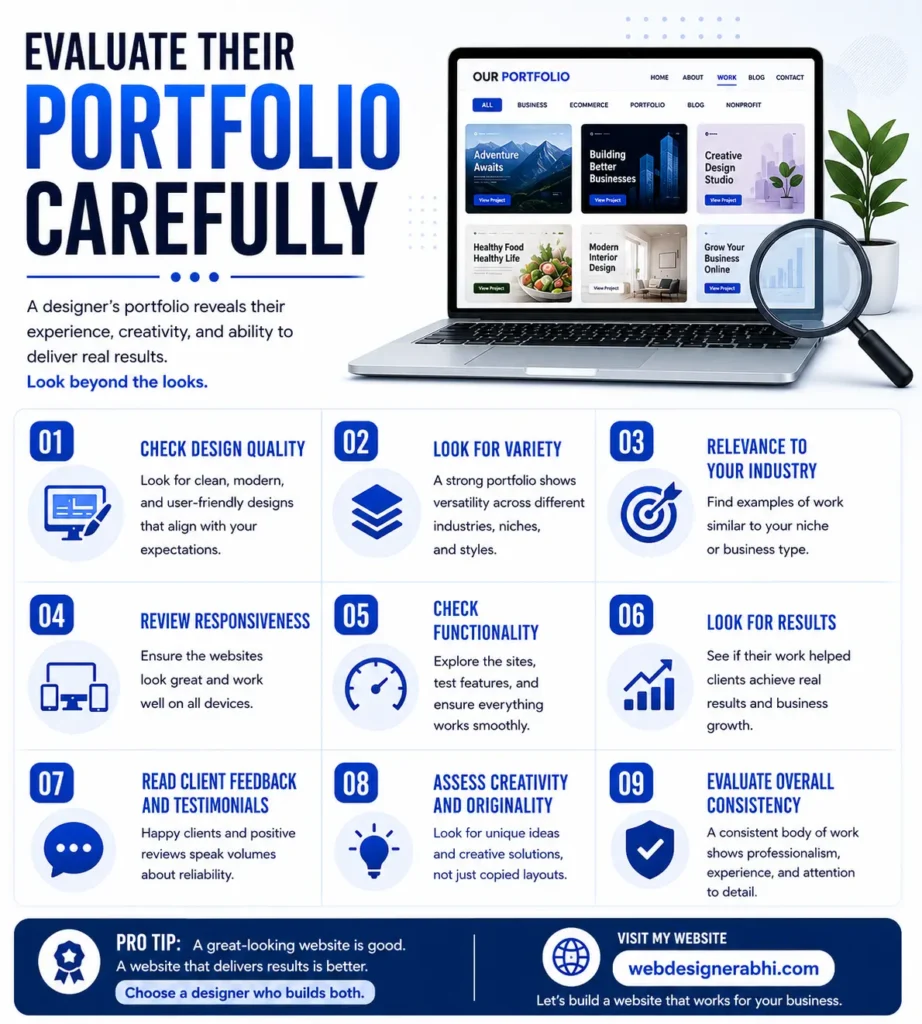
Evaluate Their Portfolio Carefully
Every serious website designer should have a portfolio. When reviewing it, don’t just look at whether the sites look good look deeper.
Ask yourself these questions:
Do they have experience in your industry or a similar one? A designer who has built websites for coaching institutes understands the audience, the content needs, and the conversion goals in a way a generalist might not.
Do the sites work on mobile? Open two or three portfolio examples on your phone. If they’re slow, hard to navigate, or look broken on mobile, that tells you everything.
Do the sites have basic SEO structure? Check whether portfolio sites have clear H1 headings, readable URLs, and descriptive page titles. These are basic SEO fundamentals. If they’re missing from their own clients’ sites, don’t expect them in yours.
Are the designs current? Web design trends evolve. A portfolio full of sites that look like they were built in 2018 suggests the designer hasn’t kept pace with modern standards.
Ask the Right Questions Before You Commit
In my experience, the questions you ask a designer before hiring them reveal more than their portfolio does. Here are the ones that matter:
What is your process from brief to launch? A professional designer will describe a clear process discovery, design mockup, development, testing, launch. Vague answers like “I’ll start building once you share the content” are a warning sign.
Will the website be mobile-responsive and SEO-ready? This should be standard but always confirm it explicitly. Ask specifically whether on-page SEO basics (title tags, meta descriptions, heading structure, image alt text) are included in the scope.
Who owns the website after it’s built? You should own your domain, your hosting account, and your website files. Some designers retain ownership as leverage. Make sure everything is registered in your name.
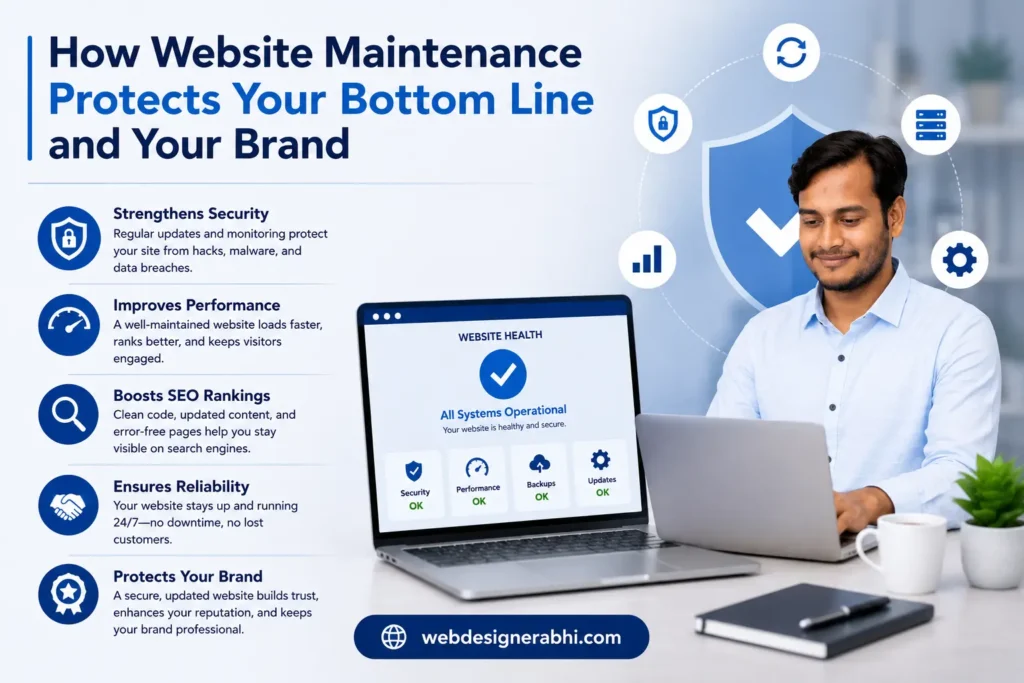
What happens after the site goes live? Will they offer website maintenance support? Training on how to update content? A handover document? Post-launch support is where many cheap engagements fall apart completely.
Can I speak with a previous client? A confident, professional designer will happily provide a reference. Hesitation here is a red flag.
Understand What’s Included in the Quote
When I work with new clients, I always provide a detailed scope of work before any money changes hands. You should expect the same from any designer you’re considering.
A quote that simply says “₹15,000 for a website” tells you almost nothing. Ask for a breakdown that covers:
- Number of pages included
- Whether the domain and hosting are included or separate
- Whether SEO setup is included
- Whether a contact form, WhatsApp integration, or other features are included
- Number of revision rounds
- Timeline and expected launch date
- What post-launch support is included and for how long
Price comparisons only make sense when you’re comparing the same scope of work. A ₹10,000 quote and a ₹35,000 quote for “a website” might be delivering entirely different things.
Assess Communication and Professionalism
This one sounds soft but it’s genuinely important. The quality of a designer’s communication before you hire them is a reliable indicator of how they’ll communicate during the project.
Do they respond promptly and clearly? Do they ask intelligent questions about your business, or do they jump straight to pricing? Do they explain things in plain language without drowning you in jargon?
Do they push back when something you’re asking for isn’t in your best interest or do they just agree with everything?
A designer who challenges your thinking respectfully, offers alternatives, and communicates proactively is a professional partner.
One who disappears for days, gives vague answers, or tells you only what you want to hear is a future headache.
Common Mistakes Businesses Make When Hiring a Website Designer
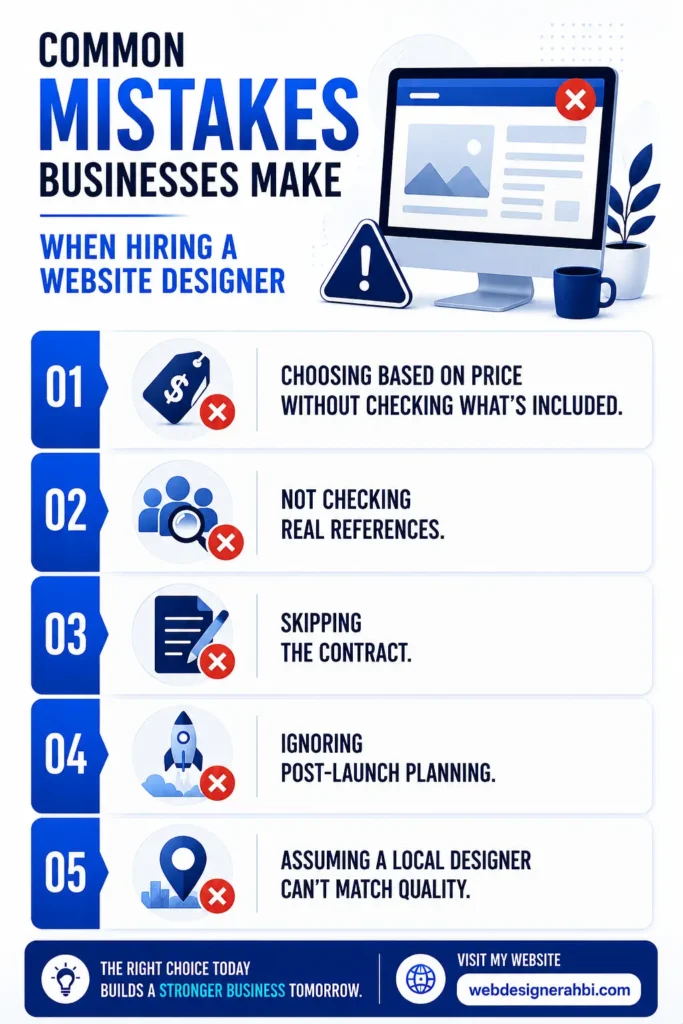
Choosing based on price without checking what’s included. A lower quote isn’t a red flag by itself many skilled designers offer affordable pricing, especially those newer to the market or focused on small business clients. The real question is what that price covers. Always ask for a clear scope of work so you know exactly what you’re getting before you commit.
Not checking real references. A curated portfolio only shows the best work. Speaking with an actual past client gives you a far more honest picture of reliability, communication, and post-launch support.
Skipping the contract. Every website project should have a written agreement covering scope, timeline, payment terms, ownership, and what happens if either party needs to exit. A handshake and a WhatsApp thread is not a contract.
Ignoring post-launch planning. Many businesses focus entirely on getting the site built and forget to plan for what comes after SEO, content updates, regular website maintenance, and performance monitoring. Ask about all of this before you sign anything.
Assuming a local designer can’t match quality. I’ve seen this assumption cost businesses significantly. Skilled, experienced web designers operate in every city in India. A designer based in Prayagraj who understands your local market and is reachable in person can be a far better fit than a distant agency with a flashy website.
What the Right Website Designer Actually Delivers
When the fit is right, a professional website designer doesn’t just hand you a finished website they give you a digital asset that:
- Builds credibility with every visitor who lands on it
- Ranks in local Google searches and brings in organic enquiries
- Converts visitors into leads through clear messaging and strong calls-to-action
- Works flawlessly on every device and loads fast enough to hold attention
- Grows with your business through ongoing maintenance and updates
That outcome is the standard you should hold any potential designer to. Not just “the website looks good.” But does it work for your business?
Sources
https://developers.google.com/search/docs/fundamentals/get-on-google
https://www.smashingmagazine.com/2013/04/legal-guide-contract-samples-for-designers
https://web.dev/learn/design/intro
The Long-Term Value of Getting This Decision Right
A website built by the right designer, maintained properly, and grown over time becomes one of your most valuable business assets. Search rankings build slowly but compound significantly.
A site that’s been live, active, and well-maintained for two years consistently outperforms a newer, better-looking site built in a hurry.
Businesses that invest in quality web design early and choose the right partner to do it don’t just have a better website. They have a stronger digital foundation that every future marketing effort builds on top of.
If you’re currently evaluating your options for a new website or a redesign take your time with this decision.
The right designer will welcome your questions, explain their process clearly, and show you genuine evidence of their work. That’s the standard.
If you’d like to explore what a professionally designed website could look like for your specific business, feel free to get in touch.
I’m always happy to have an honest conversation no pressure, no jargon, just a straightforward discussion about what you need.
How This Article Was Created
This article was written based on practical, first-hand experience as a professional web designer working with small and medium businesses across India.
The guidance, red flags, and process steps described here reflect real observations from actual client engagements not generic internet advice.
All recommendations align with Google’s E-E-A-T principles, helpful content standards, and widely accepted best practices in the web design and digital marketing industry.
No statistics have been fabricated. Any figures mentioned reflect commonly accepted industry benchmarks from credible sources.
This content is intended to genuinely help business owners make a better-informed decision about hiring a website designer not simply to rank for keywords or promote services through misleading claims.
How can I find the best website design services for small businesses in India?
Search Google with local terms like “website designer in [your city].” Check the designer’s own website if it’s fast, mobile-friendly, and well-structured, that’s a good sign. Read Google Business Profile reviews and ask for referrals from other business owners you trust.
What factors should I consider when selecting a website designer for my startup?
Look for: transparent pricing with a clear scope, mobile-first design, on-page SEO included, post-launch support, and responsive communication. A designer who replies quickly on WhatsApp and keeps you updated throughout the project is often more valuable than a big agency that’s hard to reach.
How to evaluate a web designer’s portfolio for a small business?
Open their portfolio sites on your phone check speed and mobile layout. Look for clean headings, readable URLs, and relevant industries. Make sure the sites are live and current, not broken or outdated.
How do I compare website designers based on their portfolio and client reviews?
Compare on four things: portfolio quality on mobile, what actual client reviews say (not just star ratings), what each quote specifically includes, and how fast they respond to your initial enquiry. Never choose on aesthetics alone.
What is the average cost to build a business website in India?
Realistic 2026 rates:
Basic 5-page website — ₹8,000 to ₹35,000
Full small business website (SEO, WhatsApp, forms, blog) — ₹25,000 to ₹70,000
E-commerce website — ₹50,000 and above
Annual maintenance — ₹3,000 to ₹12,000
Always ask what’s included before comparing quotes.
What questions should I ask before hiring a professional website designer?
Ask these before committing:
What’s included in the quote?
Is mobile-responsive design and basic SEO included?
Who owns the domain and hosting after launch?
How many revisions are included?
What post-launch support do you offer?
Do you have a maintenance plan?
A good designer answers all of these clearly and without hesitation.
What are the best platforms to find freelance web designers in India?
Popular platforms: Upwork, Fiverr, Freelancer.in, Internshala, and LinkedIn. For local businesses, a Google search like “website designer in [your city]” often works better local designers understand your market and are easier to reach directly.
If you’re in Prayagraj or Uttar Pradesh, I design professional, mobile-friendly, SEO-ready websites at transparent pricing with direct WhatsApp communication. Visit webdesignerabhi.com or message me to discuss your project no pressure, just a straight conversation.